Doves are a universal symbol of peace. Pigeons are a universal city pest. Yet, they both belong to the same family of birds. Raising the question of how one group can have such contrasting reputations.
Doves vs Pigeons: Same Family, Different Birds
Doves and pigeons belong to the same family of birds called the Columbidae. Generally speaking, the smaller species tend to be called doves while the larger ones get labelled as pigeons.
However, it isn’t always that straightforward. The names are applied inconsistently, which makes it difficult to tell them apart.
Take the Rock Dove (Columba livia). It’s the wild ancestor of the common Feral Pigeon that populates our cities. Despite having “dove” in its name, most people would identify it as a typical pigeon. This is why it is also referred to as a Rock Pigeon.
Similarly, the Collared Dove carries the dove label despite being comparable in size to some pigeons.
This guide will walk you through the differences between these cooing cousins, to help you understand what sets doves and pigeons apart.
How to Tell the Difference Between Doves and Pigeons – By Pest Bird Control Specialists
Although there’s considerable overlap between doves and pigeons, there are some general physical differences that might help you when you’re trying to identify which bird is which:
Size and Shape
Doves are typically smaller and slender than pigeons. Their tails also appear longer in proportion to their bodies.
Pigeons, by contrast, usually have larger, plumper bodies with shorter tails and a more rounded appearance. You’ll notice this difference when comparing the delicate form of a Collared Dove against the more substantial build of a Woodpigeon in your garden.
Plumage and Colouration
Many dove species show more distinctive markings compared to their pigeon cousins.
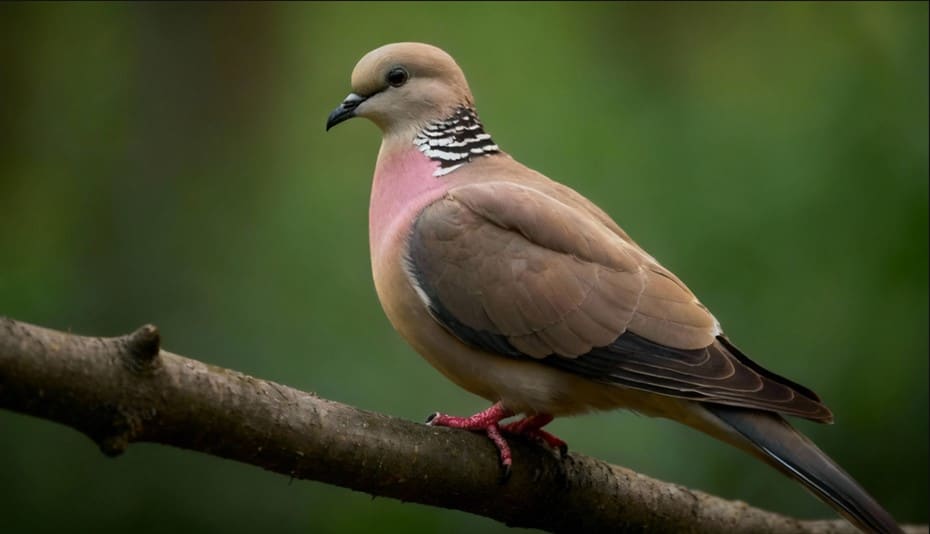
The Collared Dove has been adeptly named from its black “collar” around the neck, while the Turtle Dove displays a beautiful pattern of black and white striping on its neck.
Pigeons often feature more iridescent feathering, particularly around the neck, which glimmers in the sunlight.
Feral Pigeons, which originated from domesticated pigeons, show remarkable variation in colour. This is a result of centuries of selective breeding. Their colours range from the typical blue-grey with shimmering neck feathers to white, brown, or various patterned combinations.
Beaks and Feet
Both birds possess similar beaks designed for their seed-based diets, though doves generally have more slender beaks compared to pigeons.
Their feet also share similarities, with both having feet adapted for walking rather than the perching feet common to many other bird species.
Behaviour and Habitat Differences
The way these birds behave and where they choose to live can also provide clues to tell them apart:
Habitat Preferences
Here in the UK, doves such as the Turtle Dove and Collared Dove typically favour woodland edges, agricultural land, and suburban gardens.
Pigeons demonstrate greater adaptability to different environments.
Far from their ancestors, who lived on cliffs, Feral Pigeons flourish in urban settings and city environments. Woodpigeons appear commonly in both woodland and urban green spaces, while Stock Doves prefer woodland and farmland habitats.
Nesting Habits
Pigeons and doves aren’t known for constructing elaborate nests. Both birds build relatively simple nests, but in different locations.
Doves frequently build their nests in trees and shrubs. Pigeons, especially Feral Pigeons, commonly nest on building ledges, underneath bridges, and within other urban structures.
Feeding Behaviour
Although both feed primarily on seeds, fruits, and berries, their specific feeding patterns can differ.
Woodpigeons have earned a reputation for feasting on garden vegetation. Collared doves and Turtle Doves are more likely to visit garden bird feeders, particularly those offering seeds for an easy meal.
Feral Pigeons are perhaps the least fussy eaters of the family. Similarly to seagulls’ appetites, they are often seen scavenging for food on city pavements and in bins, which has helped them adapt to urban living.
Common UK Species and How to Identify Them
Feral Pigeon
These descendants of the wild Rock Dove are commonplace in towns and cities throughout the UK. Their colouration varies significantly due to centuries of domestication and breeding, but the classic variety displays blue-grey plumage with two black wing bars and iridescent neck feathering.
Woodpigeon
As the largest pigeon species, woodpigeons are easy to recognise with their grey bodies, pinkish breasts, and distinctive white neck patches. They are spotted regularly in woods, parks, and gardens across the UK.
Collared Dove
First introduced in the UK in the 1950s, the species now frequents gardens and urban areas nationwide. These birds have a pale, sandy colouration. They also have a signature black collar marking the back of the neck.
Stock Dove
The Stock Dove looks similar to a small, plain Wood pigeon without the white neck patch. They are typically found in woodlands and farmland areas, keeping out of the city.
Turtle Dove
Increasingly rare in the UK due to population decline, the Turtle Dove is smaller than the Collared Dove. It has a beautiful tortoiseshell patterning on its wings, a pink breast, and a distinctive purring call.
As a migratory bird, it visits the UK during the summer months before migrating to Africa for winter.
Frequently Asked Questions About Doves and Pigeons
Do doves and pigeons cause problems for homes and businesses?
Feral pigeons can create huge issues when they nest on buildings. They leave droppings that can spread diseases and parasites, and their activity can potentially harm structural elements. Woodpigeons sometimes damage crops and garden plants. Doves generally are less problematic, although Collared Doves can become numerous in certain areas.
Can doves and pigeons interbreed?
Since doves and pigeons belong to the same family, certain closely related species can potentially interbreed. However, different members of the Columbidae family don’t typically mix in the wild, as they usually follow different mating behaviours and prefer different habitats.
Are pigeons and doves protected in the UK?
Wild birds, including our native pigeons, doves and gulls, receive protection under the Wildlife and Countryside Act 1981. Feral Pigeons, however, don’t enjoy the same level of protection, and control measures may be implemented where they cause significant problems. The Turtle Dove receives special protection, given its vulnerable status and rapidly declining numbers.
Contact Pest Bird Solutions
Many pigeons and doves are protected under the Wildlife and Countryside Act 1981. This means that strict control measures are in place, and you must abide by the law to humanely and lawfully manage bird-related issues.
Fortunately, our experienced team at Pest Bird Solutions are here to help. With decades of experience, our trustworthy team at Pest Bird Solutions knows exactly the route to take care of the problem and leave you with a lasting solution.
Contact our knowledgeable team today for a free quote or advice on your bird problem on 0800 027 2555.